

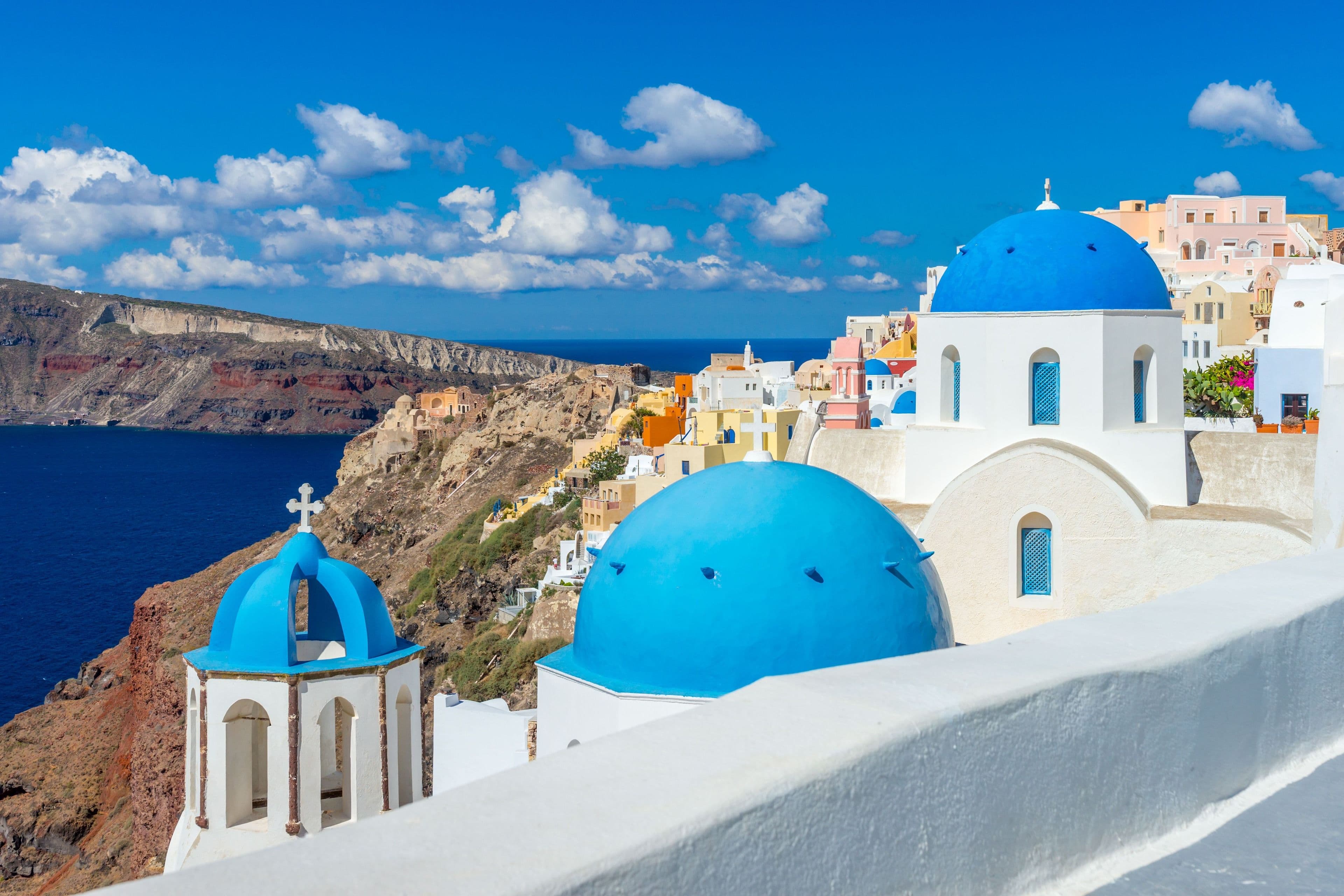
Greece: The Birthplace of Every Myth You Know
Blue domes above a sunken volcano, a marble temple that has stood for two and a half thousand years, monasteries balanced on rock pillars, and six thousand islands to choose from. The oldest holiday in the world, and still the best.
One Country, Two Completely Different Holidays.
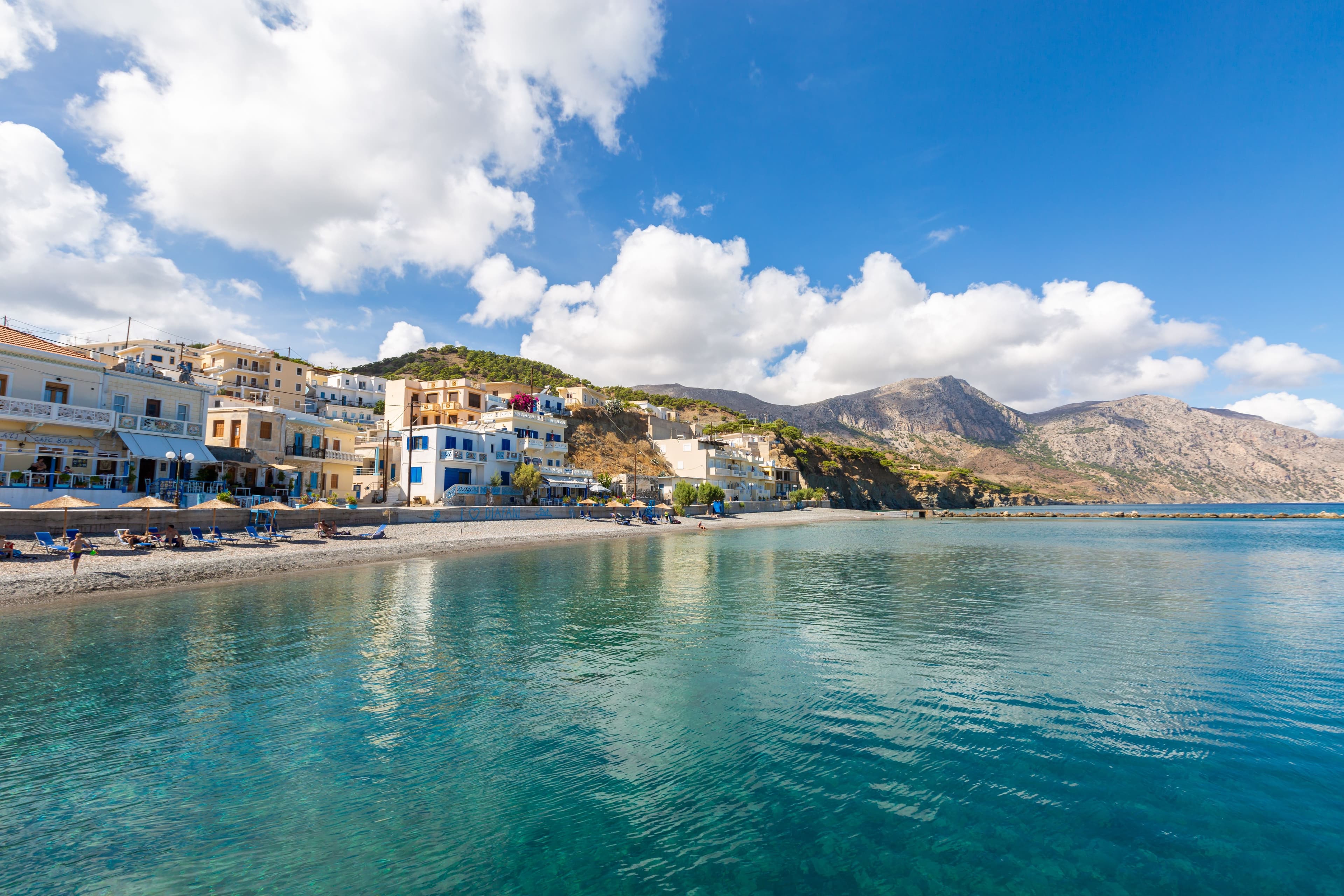
Greece hands you a choice most countries cannot. On the mainland stands the ancient world itself: the Parthenon on its rock above Athens, unchanged in silhouette since the fifth century BC, the original Olympic stadium at Olympia, the oracle's ruins at Delphi, and the monasteries of Meteora perched impossibly on stone pillars. Then you take a ferry, and it becomes another holiday entirely: whitewashed villages spilling down cliffs, water so clear the boats appear to hover, and sunsets that people plan whole trips around. Santorini is the rim of a drowned volcano; Mykonos is all windmills and beach tables; and beyond them lie six thousand islands, most of them quiet. The food is olive oil, grilled fish, salads and honey, gentle for Indian palates, and one Schengen visa opens it all. A single Gulf connection lands you in Athens from Kochi, and we plan every step of it.
The Pieces That Fill a Greece Trip.
Most journeys open in Athens and continue by ferry or short flight into the islands. These are the pieces.
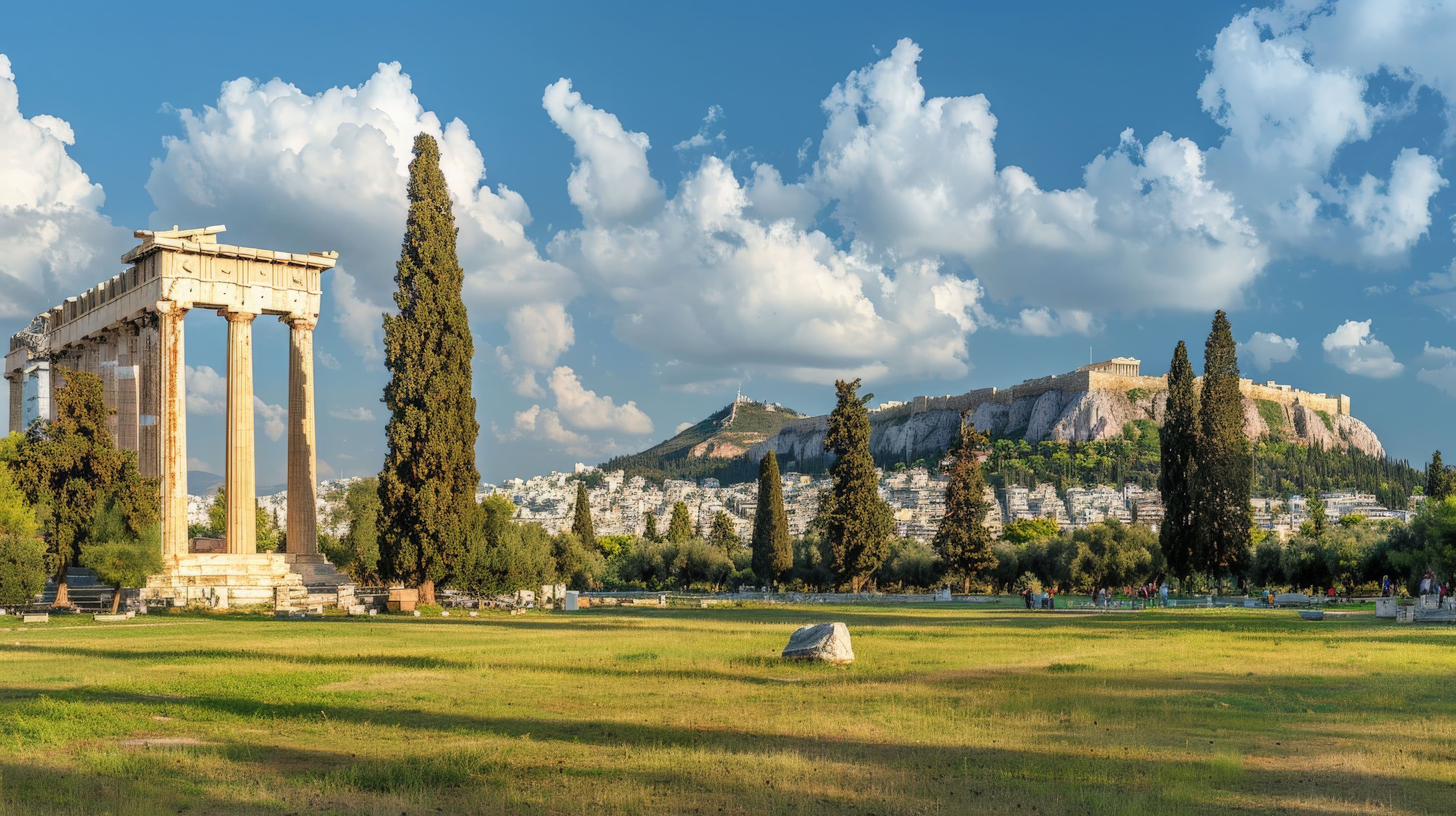
Athens and Attica
The Acropolis and Parthenon above the city
The Plaka lanes below, the changing of the guard in Syntagma Square, the Acropolis Museum, and the cliff-top Temple of Poseidon at Sounion, built for watching the sun go into the sea.
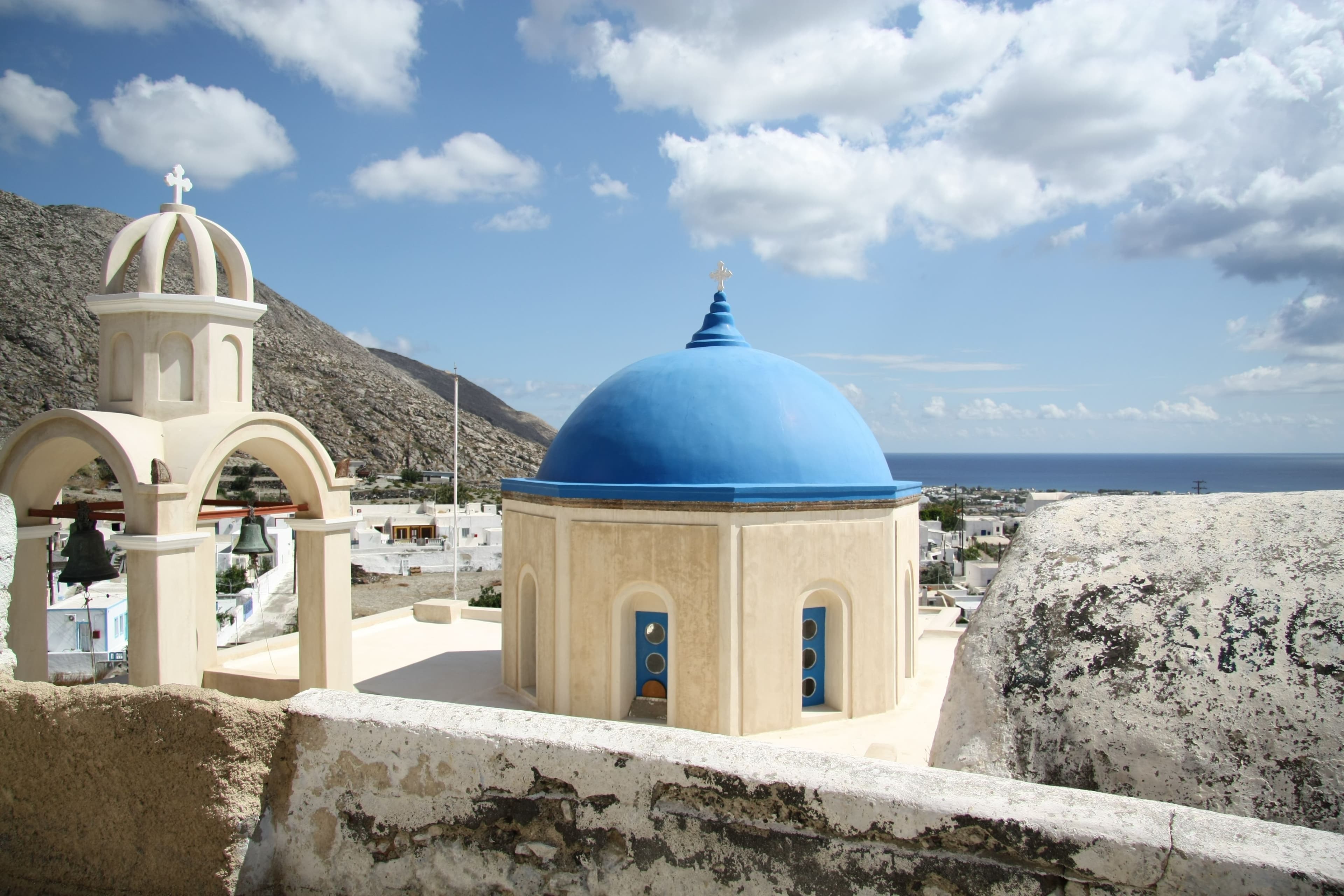
Santorini and the Caldera
A crescent island that is the rim of a collapsed volcano
With Oia's blue domes and windmills above the cliff, Fira strung along the edge, black volcanic beaches below, and the most photographed sunset in Europe every single evening.
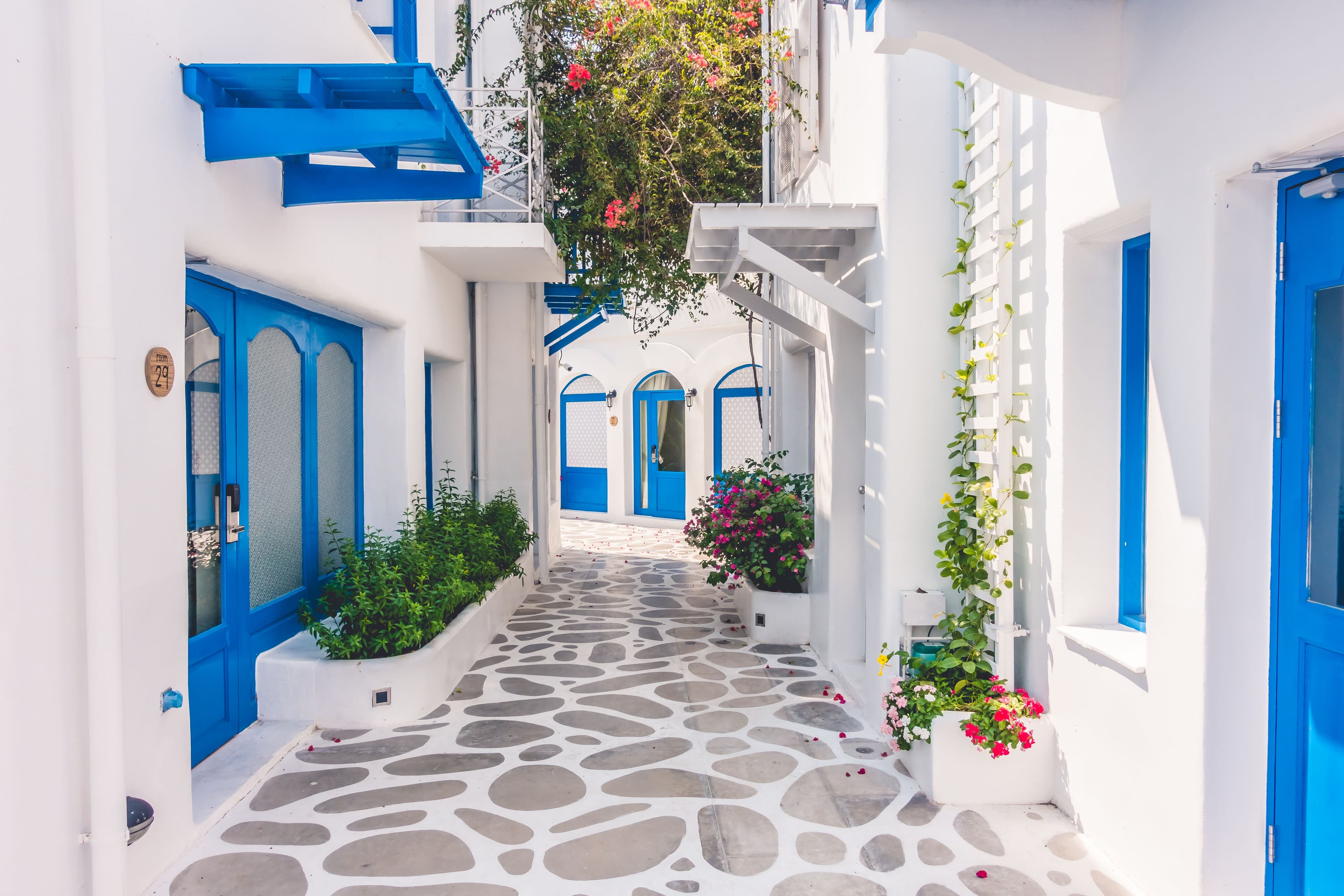
Mykonos and the Cyclades
The windmills and the Little Venice waterfront
Beach clubs and taverna tables at the water's edge, the sacred island of Delos a boat ride away, and quieter neighbours like Paros and Naxos for those who want the same sea with fewer people.
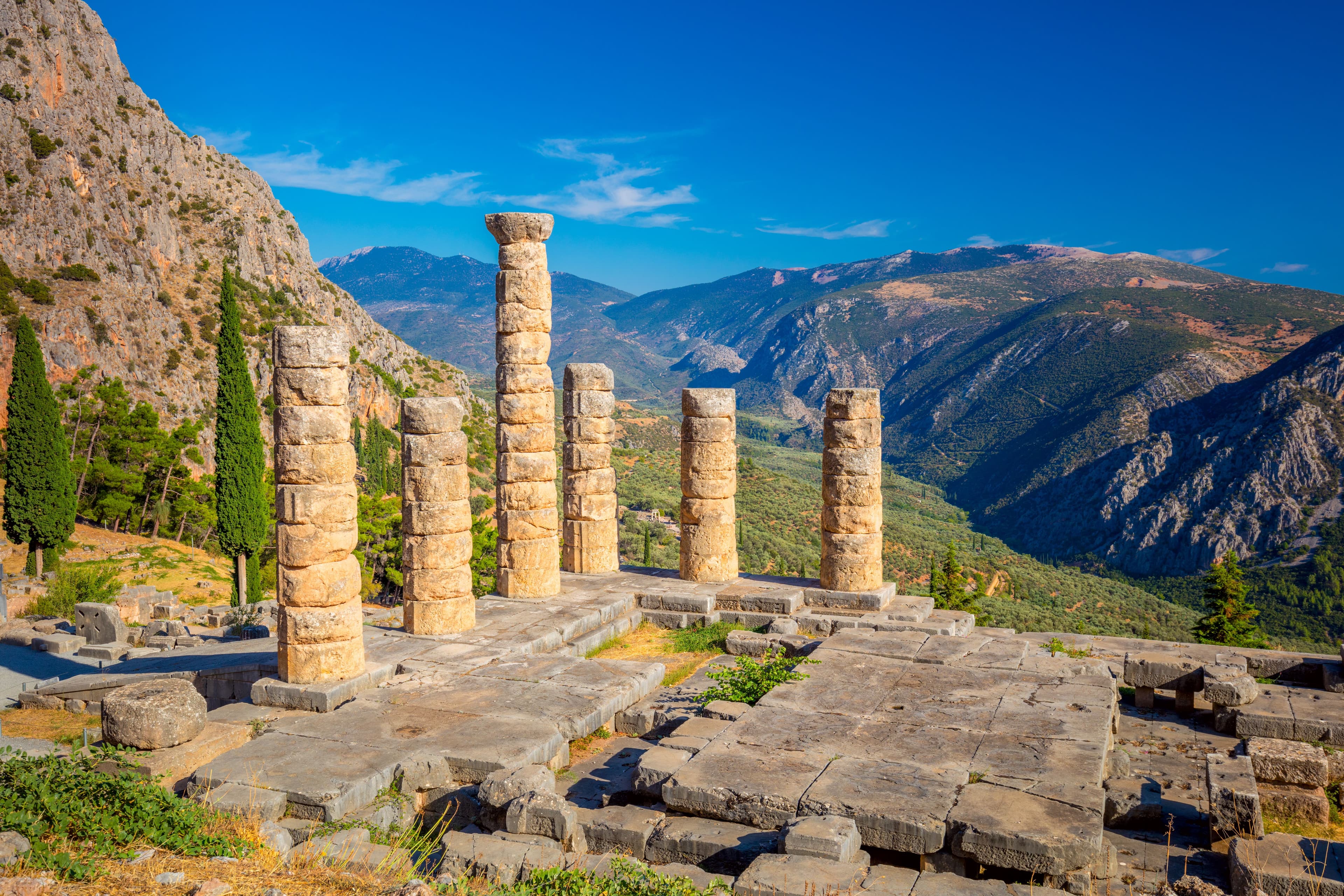
The Ancient Mainland
Delphi, where the ancient world came for prophecies
The stadium at Olympia where the Games began, the theatre of Epidaurus with its perfect acoustics, and Meteora, where six monasteries sit on sandstone pillars hundreds of feet above the plain.
Greece, in brief.
Ancient temples, cliff-top villages and a warm sea, split between a mainland of ruins and six thousand islands. The essentials first.
Sunset Over Oia

The Evening the Whole Island Turns to Watch
Santorini is not really an island. It is what remained after one of the largest volcanic eruptions in human history blew the middle out of it three and a half thousand years ago, leaving a ring of cliff around a flooded crater three hundred metres deep. The villages sit along the top edge, whitewashed and blue-domed, looking straight down into the water that filled the hole. Every evening in Oia, at the northern tip, the crowd gathers along the castle walls to watch the sun drop into the caldera, and the whole village turns gold then rose then violet. It is the most photographed sunset in Europe, and it is also a scrum unless you know where to stand. We put you on a private catamaran on the water instead, or on a caldera-facing terrace with dinner ordered, so the light show belongs to you rather than to the crowd behind you.
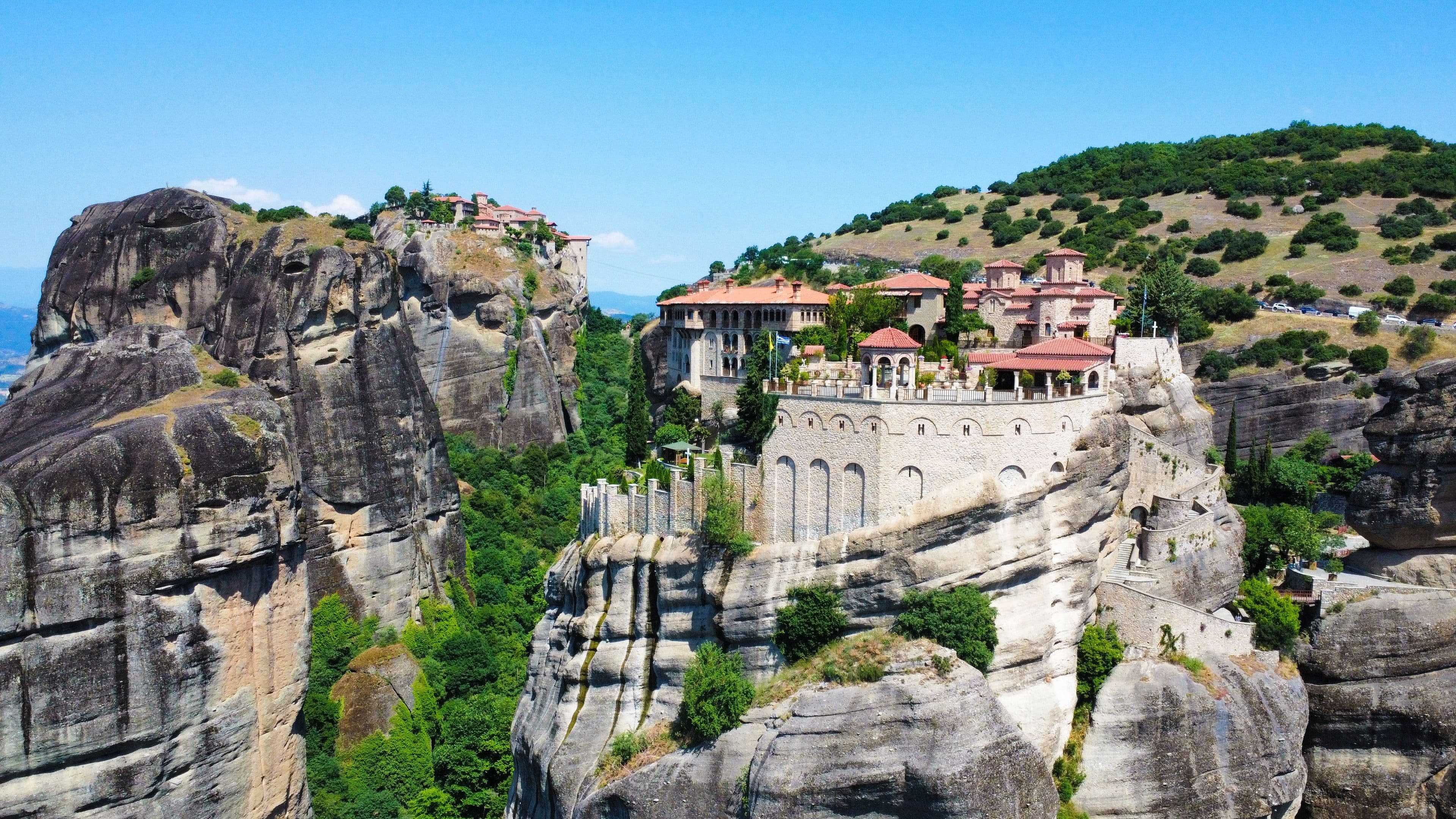
The Monasteries That Float on Stone.
In central Greece, near Kalambaka, giant pillars of sandstone rise straight from the plain, and monks built on top of them six centuries ago to be closer to God and further from invaders. Six of the monasteries at Meteora are still active, reached now by staircases cut into the rock rather than the old rope ladders and nets. From the top, the view falls away in every direction over the valley. It is a UNESCO World Heritage Site, and it costs almost nothing to enter; modest dress is required, with shoulders and knees covered, and wraps are lent at the gate. Most island-first itineraries skip it, and most travellers who go say it was the best day of the trip.
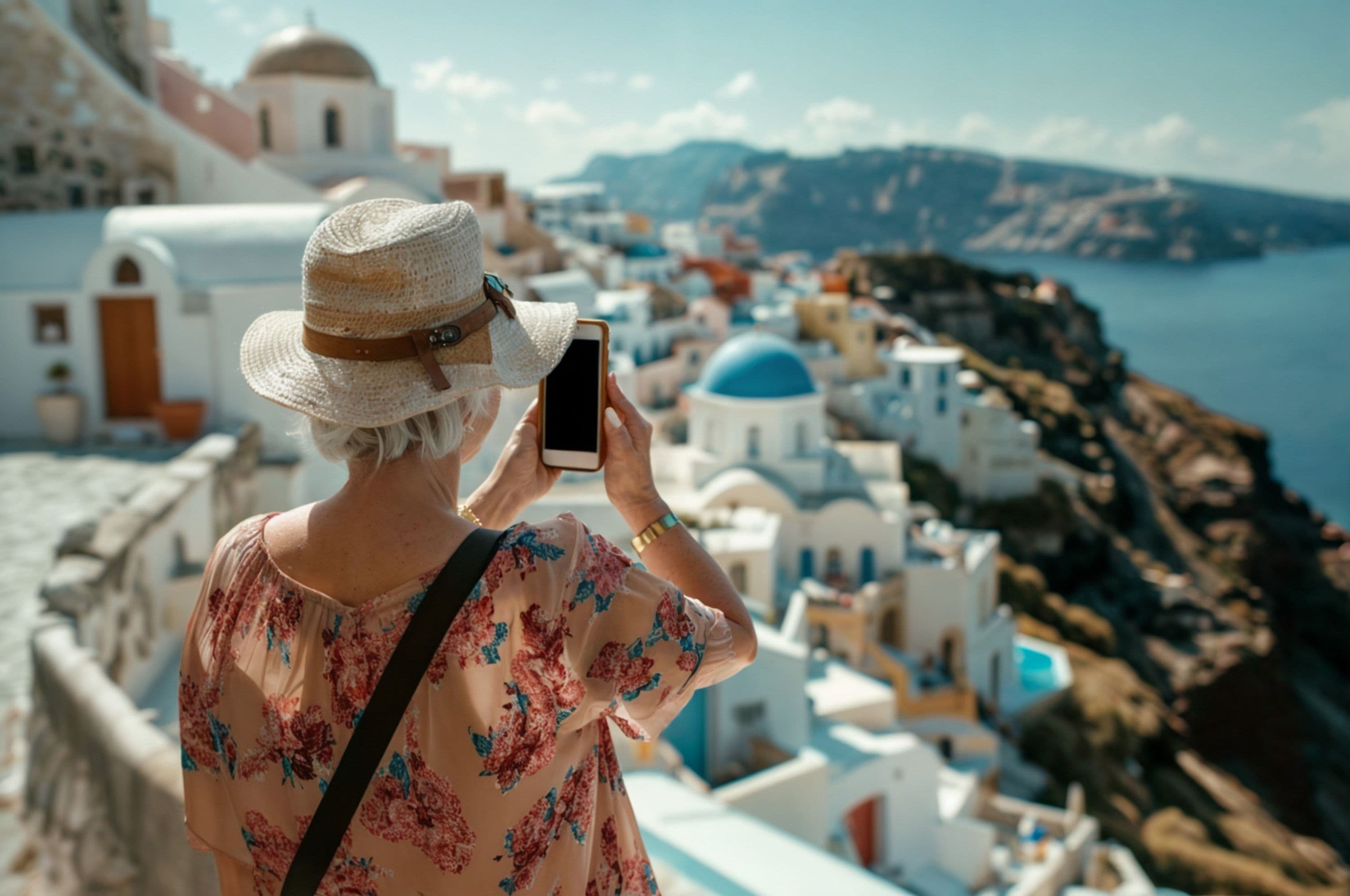
A Week for Athens and an Island, Ten Days for the Whole Story.
Greece plans open in Athens, and two days cover the Acropolis, the museum, the old lanes and a sunset at Sounion. Then the country splits by taste. Islands first, and a week gives you Santorini and Mykonos with a fast ferry between them, ending on the caldera so the trip finishes at its most beautiful. History first, and the same week runs north to Delphi and Meteora by road, ancient and astonishing in equal measure. Ten days does both, or adds a third quieter island like Paros or Naxos. Turkey and Italy sit close for longer plans, and Athens connects onward easily. Send your dates and your party, and the full plan comes back, flights from Kerala included, shaped until it fits.
The Oldest Story Deserves a Proper Telling.
20 Years of Experience
Two decades of journeys from Kerala, with Europe among our most planned and most loved.
Routes That Follow the Ferries
Island order planned around sailing times and sea conditions, with the caldera sunset booked rather than chanced.
Tables That Taste of Home
Greek food is naturally kind to Indian palates, and Indian restaurants in Athens are arranged for those who want them, with vegetarian options mapped across the islands.
One Booking, Door to Door
Flights, visa file, hotels, ferries and island transfers held together by a single Fortune team.
FAQ
Questions with useful answers
A single smooth Gulf connection takes you from Kochi or Trivandrum to Athens, usually landing the same day, and island flights or fast ferries continue from there. We book the routing that keeps the connection shortest for your dates.
Yes, a Schengen visa, which also covers the rest of the zone on a combined trip. Fortune prepares the complete file, forms, appointments, hotel proofs and insurance; start 45 to 60 days before travel and the process stays unhurried.
May to June and September to October are the sweet spots, warm enough to swim and calm enough to enjoy, with October holding the sea's warmth and the best light. July and August are hot, lively and crowded, while winter suits Athens and the mainland ruins without the queues.
Two is right for a week, three for ten days. Ferry hops eat half a day each, so fewer islands and longer stays almost always make the better holiday, and we sequence them so you never backtrack.
It is one of the finest in Europe. Caldera-view suites in Santorini, a private sailing day through the Cyclades, dinner above the water at sunset, and quieter islands for the days between, all paced for two.
Comfortably. Greek cooking is full of vegetarian dishes built on olive oil, bread, cheese, beans and vegetables, and Athens has Indian restaurants that we pre-arrange, with options mapped on the islands before you fly.