

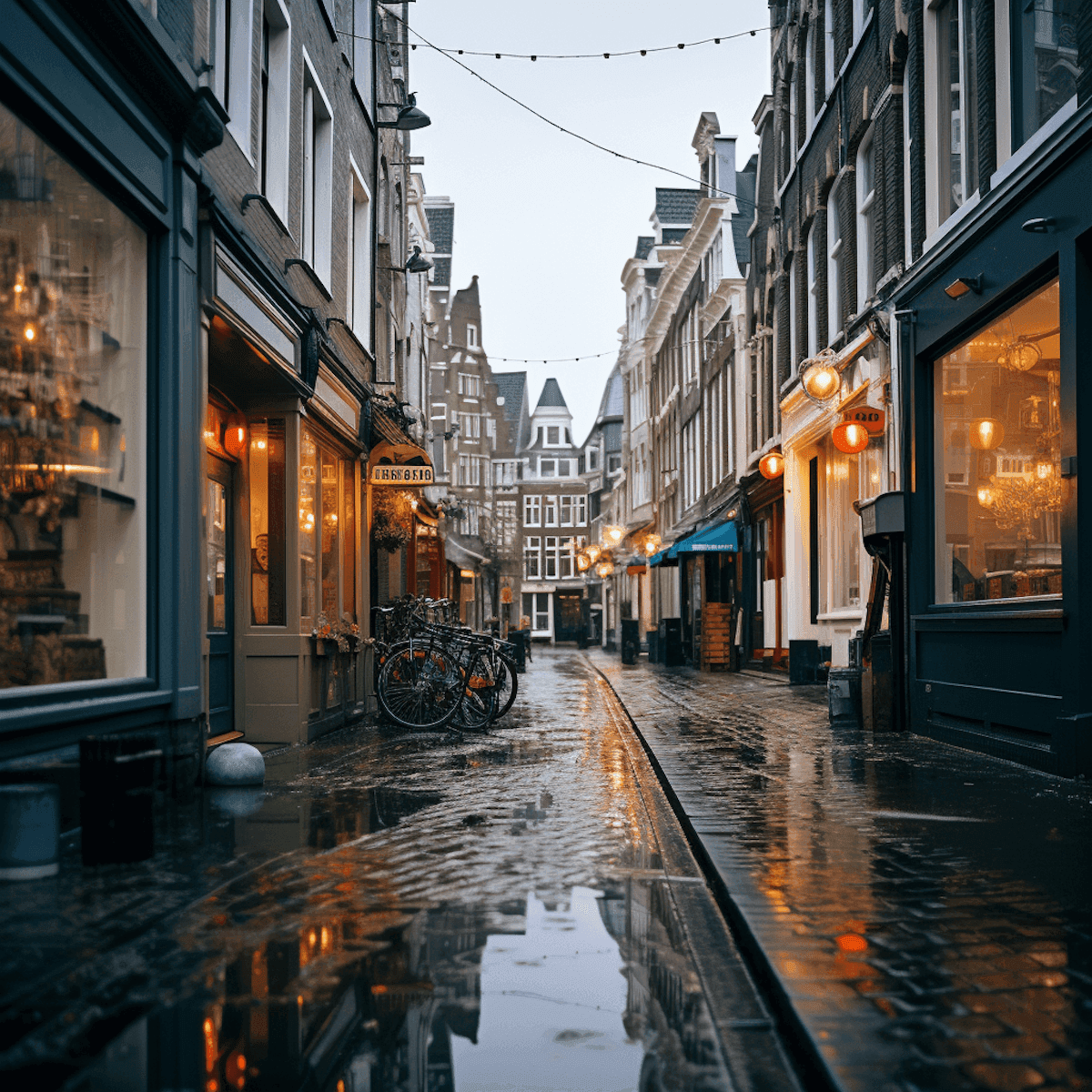
Netherlands: A Country That Built Itself
Canals in rings around a golden-age city, tulip fields you can see from the air, windmills still turning on a river bank, and bicycles outnumbering the people. A quarter of it lies below sea level, and every metre of it was argued out of the water.
Small, Flat, and Endlessly Clever.
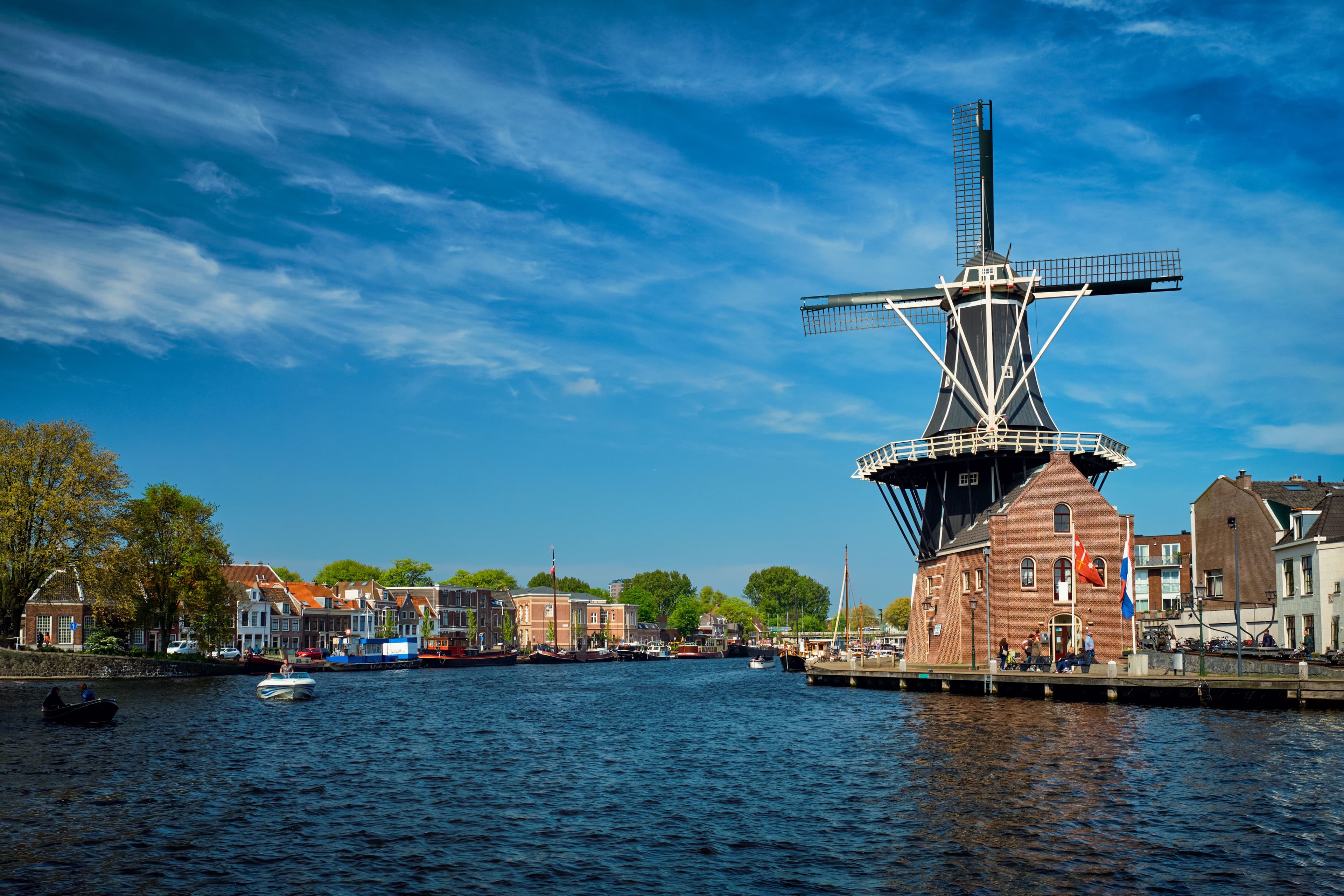
The Dutch built their country the way Kerala builds paddy bunds, by holding back water and refusing to lose. A quarter of the land sits below sea level, protected by dykes and drained by windmills, and the result is the most orderly, most cyclable, most quietly inventive country in Europe. Amsterdam wraps four canal rings around a centre of narrow gabled houses, with Van Gogh and Rembrandt hanging a few streets apart and boats moving under the bridges all day. Outside the city, Keukenhof turns seven million bulbs into colour every spring, Zaanse Schans keeps its working windmills on the river, and Kinderdijk lines nineteen of them along a canal. English is spoken everywhere, distances are tiny, and one Schengen visa opens it all. We plan every step of it.
The Corners That Fill a Dutch Trip.
Most journeys base in Amsterdam and reach everything else by train inside an hour. These are the pieces.
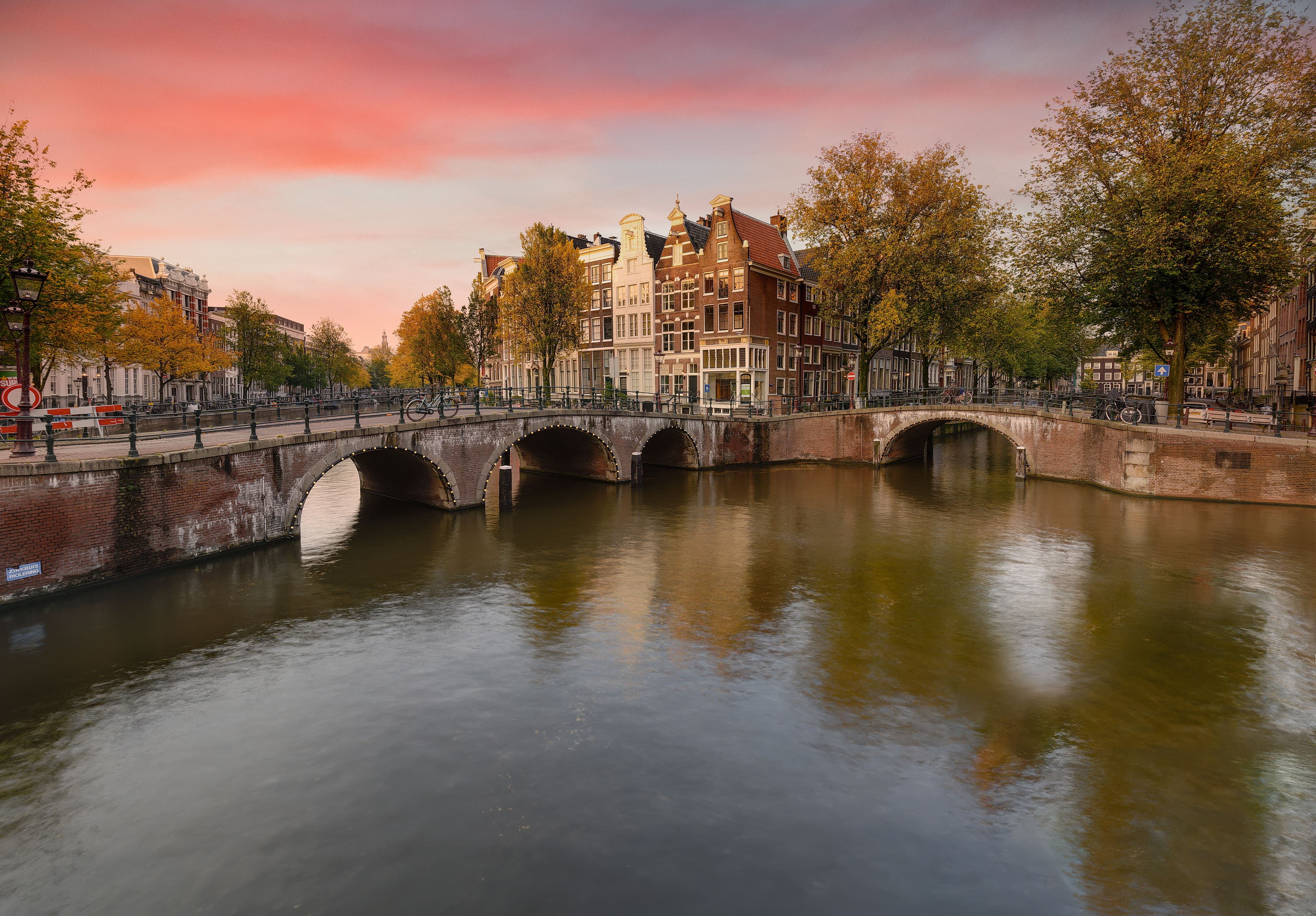
Amsterdam and the Canals
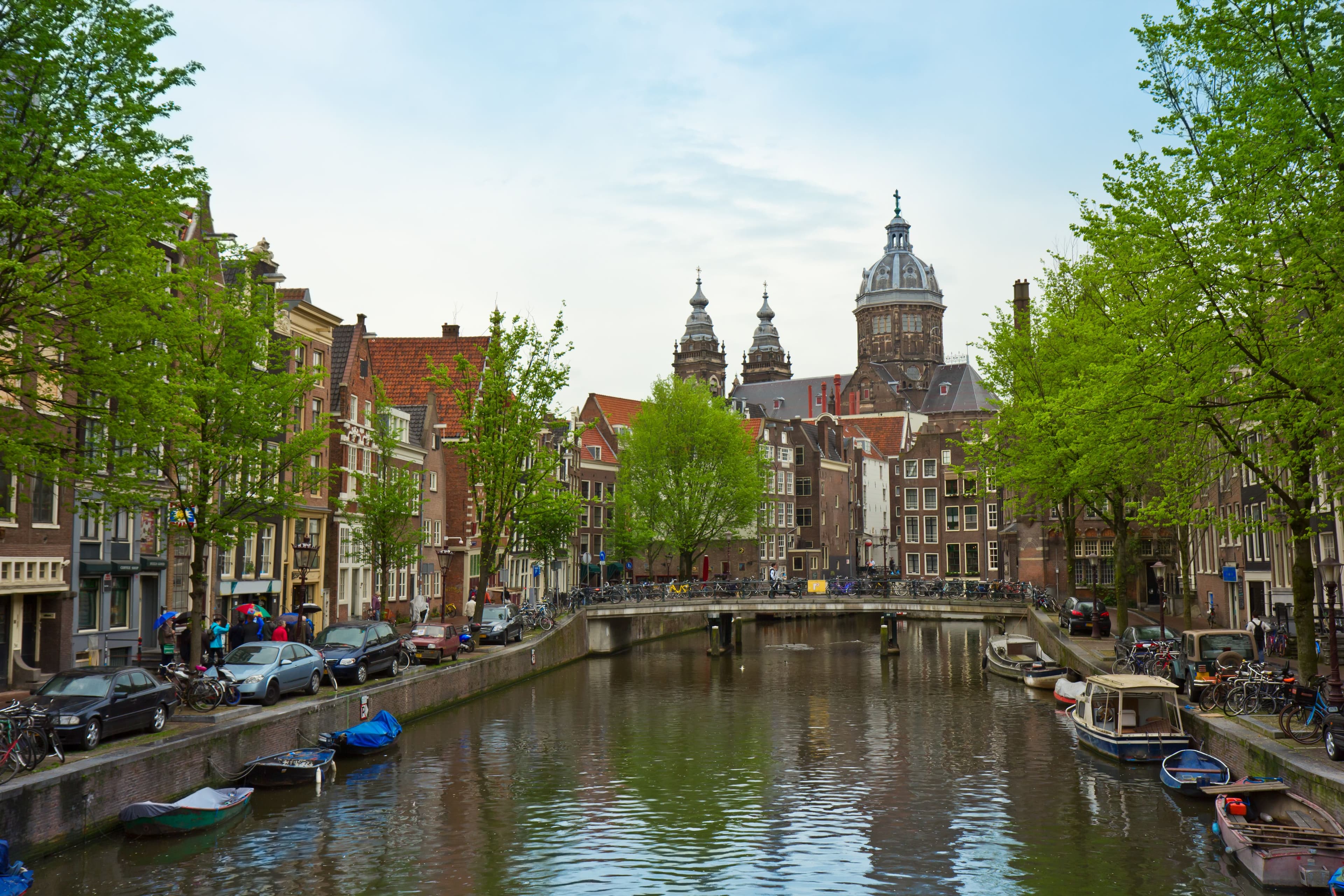
The UNESCO canal ring with its leaning gabled houses
Evening cruises under lit bridges, the Rijksmuseum and the Van Gogh Museum, the Anne Frank House on the Prinsengracht, and the flower market floating on the Singel.
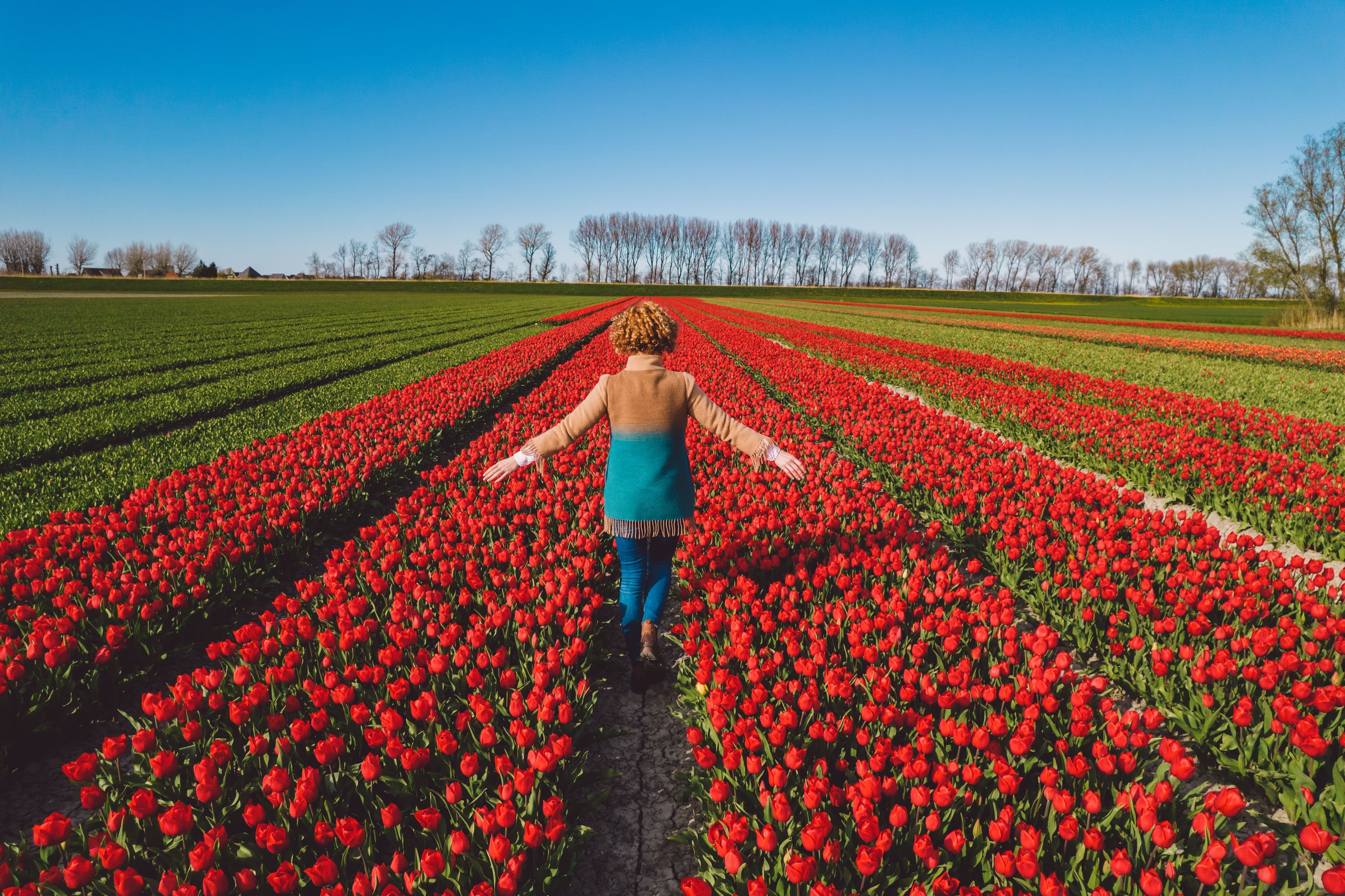
The Bulb Fields and the Coast
Keukenhof outside Lisse, open only from late March to mid May
When seven million bulbs bloom across thirty-two hectares, with the striped tulip fields around it, and Haarlem's old centre and the North Sea beaches nearby.
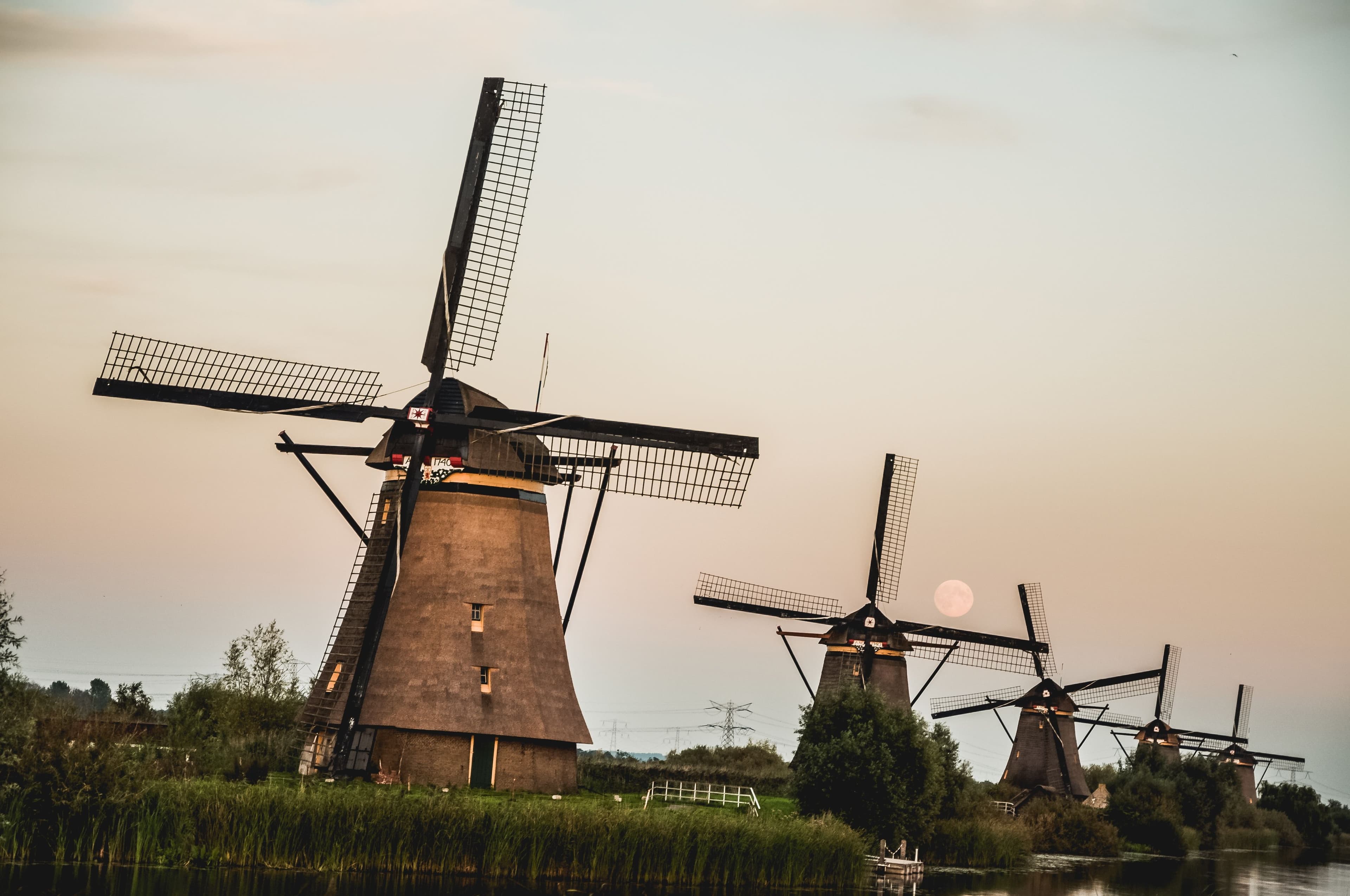
Zaanse Schans and the North
Green wooden houses and working windmills on the Zaan river
With cheese and clog workshops, the old fishing villages of Volendam and Marken on the water, and the Afsluitdijk causeway running thirty-two kilometres across the sea.
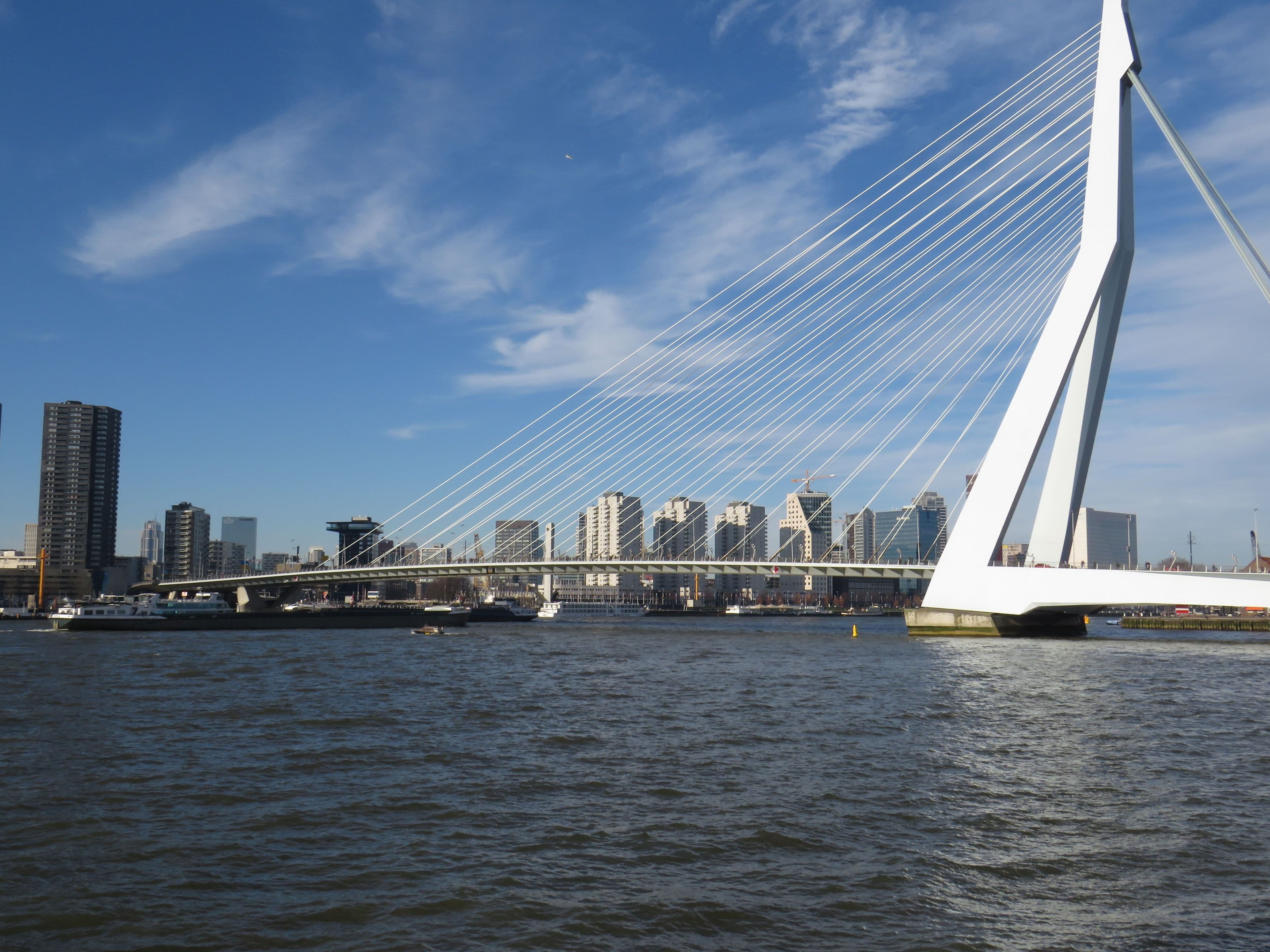
The Hague, Delft and Rotterdam
Madurodam's miniature Holland built at 1:25 scale
The Dutch parliament and the Mauritshuis with Vermeer's Girl with a Pearl Earring, Delft's blue pottery and canals, and Rotterdam's modern skyline, rebuilt entirely after the war.
The Netherlands, in brief.
Canal cities, tulip fields, working windmills and world-class museums, all within an hour of each other. The essentials first.
Keukenhof in Bloom
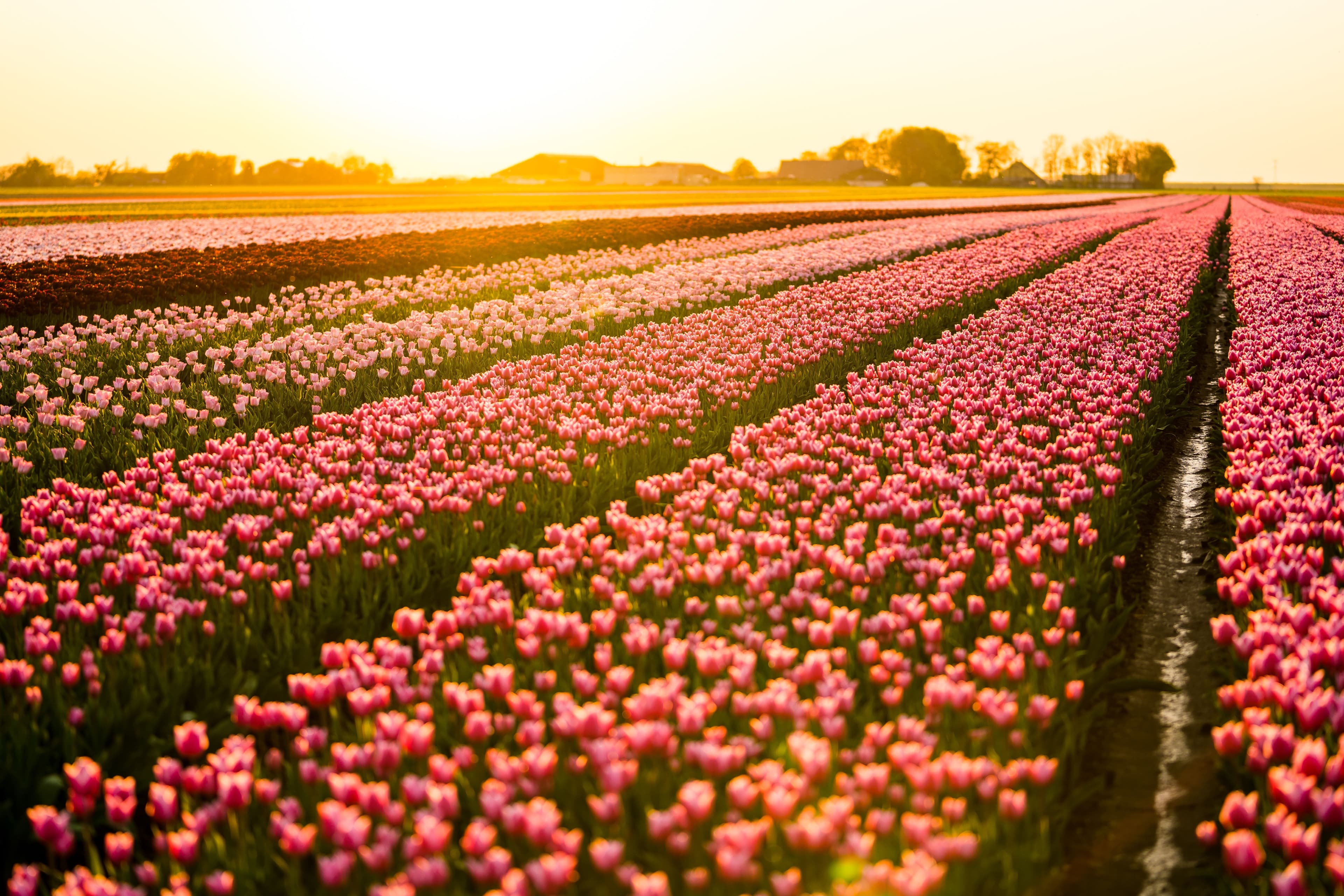
The Garden That Opens for Eight Weeks a Year
Keukenhof is the largest flower garden in the world and it exists on a schedule nothing else in European travel matches. It opens in the third week of March and closes in the second week of May, and in between, roughly seven million bulbs come up across thirty-two hectares of parkland: tulips in blocks and ribbons, hyacinths, daffodils, blossom overhead and pavilions full of orchids. Outside the fences, the commercial bulb fields run to the horizon in stripes of red, yellow and violet. Peak colour usually falls in mid April, though a cold spring pushes it later and a warm one brings it forward, so the date has to be chosen rather than hoped for. Go early in the day, before the coaches, and see the fields themselves by bicycle or by a small plane from Lisse if you want the photograph everyone recognises. If your dates fall outside the window, we say so plainly and plan Madurodam and the windmills instead.
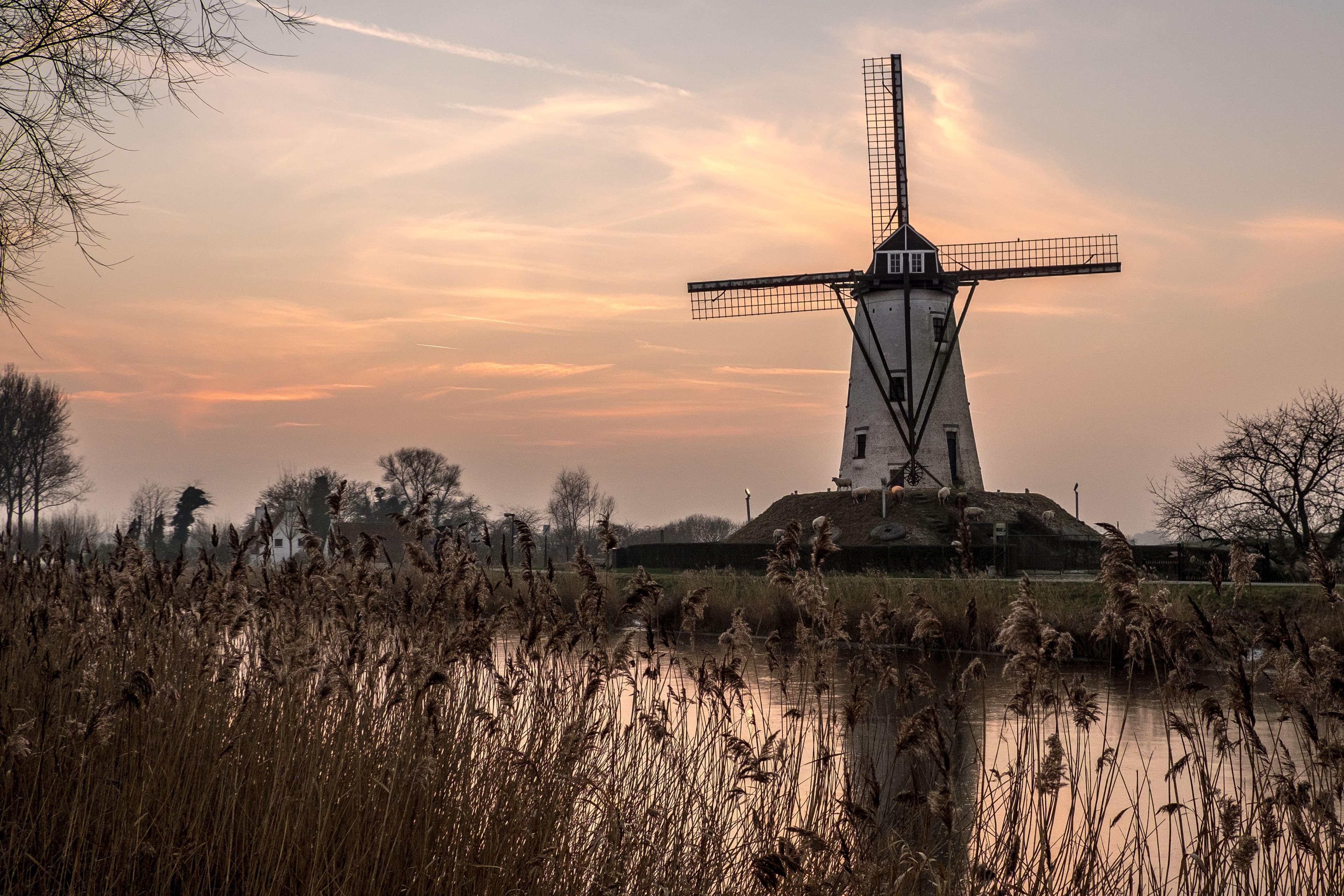
The Windmills Were Machines, Not Ornaments.
A Dutch windmill was never decoration. For four centuries they were the engines that made this country possible, pumping water out of drained land, sawing timber for the ships of the golden age, grinding grain, spices and pigment for paint. At Zaanse Schans several still work, and you can climb inside to watch the gears turn and the millstones move. At Kinderdijk, nineteen eighteenth-century mills stand in a row along the canals, a UNESCO site and the classic photograph of the Netherlands. Ask a miller how the sails are set to signal celebration or mourning, and you get a lesson no guidebook carries.
Four Days for the Country, a Week With the Neighbours.
Dutch plans are simple because the country is small. Amsterdam fills three days without repeating itself: the canals and a cruise, the Rijksmuseum and Van Gogh, the Anne Frank House booked well ahead, and an evening walk through the ring. A fourth day takes Zaanse Schans and Volendam, or the Hague and Delft, each under an hour by train. In tulip season, one of those days belongs to Keukenhof. Beyond that the borders do the work: Brussels and Bruges are two hours south, Paris three and a half by high-speed train, and Cologne two east, all on one visa. Send your dates and your party, and the full plan comes back, flights from Kerala included, shaped until it fits.
A Country of Timings, Planned to the Day.
20 Years of Experience
Two decades of journeys from Kerala, with Europe among our most planned and most loved.
Routes That Follow the Bloom
Keukenhof dates checked against your travel window before anything is booked, museum tickets held in advance, and canal cruises timed for dusk.
Tables That Taste of Home
Indian dinners arranged in Amsterdam and the Hague, with vegetarian options mapped for the smaller towns.
One Booking, Door to Door
Flights, visa file, hotels, trains and timed museum and garden tickets held together by a single Fortune team.
The Dutch day sits on all four of our Europe group tours.
Every fixed Europe departure spends a full day in Holland. What changes between them is whether the tulips are on the table, and what the day is paired with either side.
Grand Europe
15 DAYS | KOCHI TO KOCHI · 9 COUNTRIES
EXPERIENCES:
Emirates Flights | Eurostar London to Paris | UK and Schengen Visas | 4 Star Hotels | All Meals The night before is in Amsterdam · so the Dutch day starts fresh rather than after a border crossing. Departures inside the bulb season go to Keukenhof. Departures after it closes go to Madurodam instead. Either way the day carries on to Zaanse Schans for the working windmill · the clog shoe workshop and the Catharina Hoeve cheese farm · with free time to walk · then an evening canal cruise before the coach leaves for Cologne. The wider route runs London to Rome.
Excellent Europe
13 DAYS | KOCHI TO KOCHI · 8 COUNTRIES
EXPERIENCES:
Oman Air Flights | Schengen Visa | 4 Star Hotels | All Meals The only route that puts the canal cruise first thing in the morning · which is the quietest time on the water. Zaanse Schans and the cheese farm follow after lunch · then Madurodam in the Hague to close the day. Two nights in the Netherlands here · arriving from Cologne the evening before and leaving for Brussels the next morning. This is the November route · so Keukenhof is outside its season.
Dream Europe
9 DAYS | KOCHI TO KOCHI · 5 COUNTRIES
EXPERIENCES:
Emirates Flights | Schengen Visa | 4 Star Hotels | All Meals | Lindt Home of Chocolate Madurodam opens the day here · with the whole country rebuilt at 1:25 scale · followed by the traditional windmill and clog shoes. Zaanse Schans and the cheese tasting come next · with free time for photographs. The canal cruise runs in the evening before the drive into Germany. This route departs in May and August · so the Dutch day is built around Madurodam rather than the gardens.
Wonders of Europe
9 DAYS | TRIVANDRUM TO TRIVANDRUM · 5 COUNTRIES
EXPERIENCES:
Emirates Flights | Schengen Visa | All Meals | Malayalee Tour Manager The Trivandrum departure · and the second of the two that can reach Keukenhof. Spring departures visit the garden · later ones go to Madurodam. Zaanse Schans follows with the windmill · the clogs and the cheese farm · and the day finishes in Amsterdam at Dam Square. Belgium comes the next morning.
FAQ
Questions with useful answers
A single smooth Gulf connection takes you from Kochi or Trivandrum to Amsterdam, usually landing the same day. Schiphol is one of Europe's best-connected airports, which also makes it a convenient entry point for a wider European trip.
Yes, a Schengen visa, and the same visa covers Belgium, Germany, France and the rest of the zone on a combined trip. Fortune prepares the complete file, forms, appointments, hotel proofs and insurance; start 45 to 60 days before travel and the process stays unhurried.
Late March to mid May for the tulips, which is the single strongest reason to time a trip, with mid April usually the peak. May to September brings mild weather and long light, and December adds Christmas markets and canals lit for the season.
Then we say so and plan around it. The gardens open only for about eight weeks a year, and outside that window we build the day around Madurodam, Zaanse Schans and the windmills at Kinderdijk instead, so nothing on your itinerary is a closed gate.
Yes. Amsterdam has a wide choice of Indian and vegetarian restaurants and we pre-arrange dinners, with options mapped for Haarlem, Delft and the Hague before you fly.
It is. Every fixed departure reaches Amsterdam, with Madurodam, the windmills, and the clog makers on the longer routes. This customised trip is for the Netherlands the coach window only shows you: Delft, Leiden, the Keukenhof in spring, and the canals by boat at your own pace.